Permanent Marks: The Irreversible Risks Hidden Inside Your Biometric Data
Photo: biometric fingerprint facial recognition digital security surveillance, via www.3clogic.com
The fingerprint you pressed against your phone this morning to check your email is, in a meaningful sense, the same fingerprint you will carry for the rest of your life. No data breach, no identity-theft recovery plan, and no federal agency can issue you a replacement. That immutability is precisely what makes biometric identifiers so attractive to security engineers—and so dangerous when the systems that store them fail.
Biometric authentication has expanded with remarkable speed across American life. Fingerprint sensors unlock phones and laptops. Facial-recognition algorithms clear passengers through airport security. Iris scanners verify identities at border crossings. Voice-pattern matching authenticates callers to bank fraud departments. Each of these systems creates a digital record of something uniquely physical about you—and each of those records must be stored somewhere, governed by someone, and protected against adversaries who understand their permanent value.
The Difference Between a Password and a Body Part
The security community has spent decades reinforcing one principle above all others: if a credential is compromised, rotate it. Change the password. Issue a new card. Revoke the certificate. This logic—the foundation of modern credential hygiene—breaks down completely when the credential is a biological attribute.
Consider what happened in 2015, when the U.S. Office of Personnel Management suffered one of the most damaging breaches in federal history. Among the 21.5 million records exposed were the fingerprints of approximately 5.6 million current and former federal employees and contractors. Those individuals cannot change their fingerprints. The data, once in the hands of foreign intelligence services, remains useful indefinitely—not merely for bypassing fingerprint scanners, but for linking records across databases, manufacturing false identities, and building intelligence profiles that will outlast any individual career.
The OPM incident was not an anomaly. It was a preview.
How Biometric Data Is Being Collected Without Clear Consent
Federal law in the United States does not impose a uniform consent requirement for biometric data collection. The result is a patchwork in which your rights depend almost entirely on geography and circumstance.
Illinois stands as the national outlier. Its Biometric Information Privacy Act, enacted in 2008, requires companies to obtain written consent before collecting biometric identifiers, mandates a published retention policy, and prohibits the sale of biometric data. It also grants individuals a private right of action—meaning residents can sue violators directly. Several major class-action settlements, including a $650 million agreement involving Facebook's facial-recognition feature and a $228 million settlement against BNSF Railway, were brought under this statute.
Texas and Washington have enacted similar laws, though without the private right of action. Most states have nothing comparable. At the federal level, the closest analogue is the Video Privacy Protection Act—a 1988 statute drafted to protect VHS rental records, not retinal scans.
Private companies have exploited this regulatory vacuum aggressively. Clearview AI scraped more than three billion facial images from social media platforms without user consent and sold the resulting database to law enforcement agencies and private clients. A federal court ultimately found the company in violation of Illinois's BIPA, but its database—and others like it—continues to exist.
Spoofing, Injection, and the Technical Vulnerabilities Nobody Advertises
Biometric systems are marketed on the premise that a fingerprint or a face is uniquely yours and therefore uniquely secure. The premise is partially true. The conclusion is not.
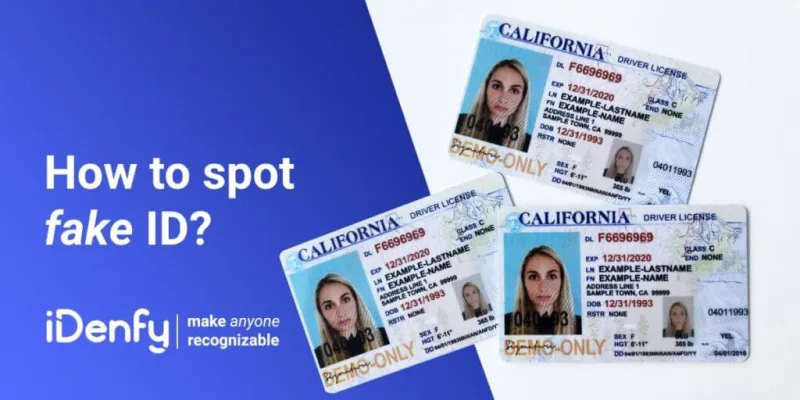
Researchers have demonstrated multiple attack vectors against biometric authentication systems. High-resolution photographs printed on glossy paper have defeated certain fingerprint sensors. Three-dimensional facial models constructed from social media images have unlocked phones protected by facial recognition. More sophisticated "presentation attacks" involve prosthetic materials—silicone overlays, printed masks, contact lenses with patterned irises—designed to fool sensors at close range.
Beyond physical spoofing, digital injection attacks pose an equally serious threat. Rather than presenting a fake biometric to a sensor, an attacker intercepts the communication between the sensor and the authentication system and injects a previously captured biometric template directly into the data stream. This technique bypasses the physical sensor entirely and is particularly relevant in remote-verification contexts—the kind increasingly used for financial-account access, government-benefit enrollment, and healthcare portals.
Voice biometrics, which financial institutions have adopted as a passive authentication mechanism for phone banking, face a compounding threat from AI-generated audio. Synthetic voice models, trained on as little as a few seconds of recorded speech, can replicate a target's vocal patterns with sufficient fidelity to defeat voice-matching algorithms. The same technology enabling deepfake audio scams—already documented in elder-fraud cases across the United States—is directly applicable to defeating voice-authentication systems.
What Practical Protection Looks Like Today
Given the current regulatory landscape, individuals bear more responsibility for their biometric exposure than they should reasonably have to. Several precautions are worth adopting now.
Understand what you are enrolling in. Before enabling biometric authentication on any application or platform, review its privacy policy specifically for language about biometric data storage, sharing, and retention. If the policy is vague or silent on these points, treat enrollment as a risk rather than a convenience.
Prefer on-device processing where possible. Apple's Face ID and Touch ID store biometric templates in a dedicated Secure Enclave chip and do not transmit them to Apple's servers. This architecture is meaningfully more protective than cloud-based biometric storage. Where a device offers both on-device and cloud-based biometric options, the on-device approach carries lower breach exposure.
Be selective about third-party facial recognition. Uploading photographs to platforms with known facial-recognition programs—or enabling features that tag faces in shared albums—contributes to commercial biometric databases. The tradeoff is rarely made explicit at the point of consent.
Monitor state-level legislative developments. Illinois's BIPA model is slowly spreading. If your state is considering biometric privacy legislation, public comment periods and legislative hearings represent opportunities for citizen input that rarely exist in federal rulemaking.
The Permanence Problem Has No Easy Answer
Biometric authentication solves a genuine problem: passwords are forgotten, stolen, and reused at scale. The efficiency gains are real. But the security community has a phrase for systems that trade one risk profile for another without fully accounting for the new exposure: a lateral move dressed up as progress.
The irreversibility of biometric data demands a higher standard of protection than the industry or the law currently requires. Until that standard exists, every fingerprint sensor you press and every facial-recognition camera you pass is adding a permanent entry to a record you may never be able to correct, dispute, or delete.