Forged in Code: How AI-Generated Identity Documents Are Fueling a New Wave of Fraud
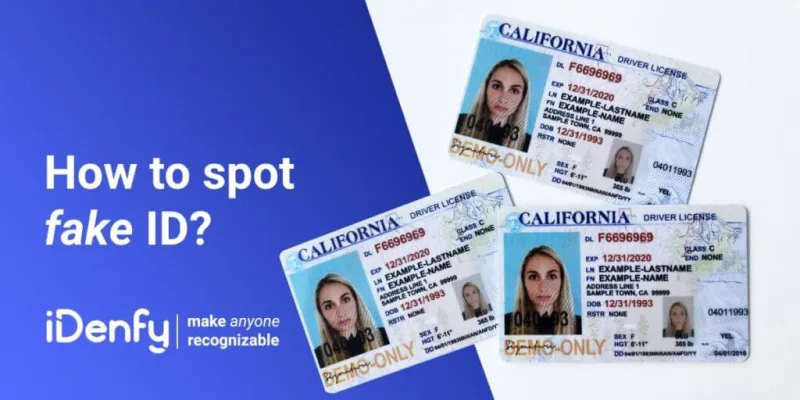
Photo: fake identity document fraud digital forgery passport, via www.idenfy.com
For most of American history, producing a convincing counterfeit government ID required specialized equipment, physical materials, and a level of technical skill that kept the practice confined to a relatively small criminal class. That barrier has effectively collapsed. Today, a combination of generative artificial intelligence, widely available image-editing software, and darknet distribution networks has made synthetic identity documents accessible to virtually anyone willing to seek them out — and the downstream consequences for ordinary Americans are serious and growing.
This is not a story about exotic cybercrime. It is a story about a threat that touches mortgage applications, job screenings, age verification systems, financial account openings, and the fundamental integrity of identity itself.
How the Forgery Pipeline Works
The production of synthetic identity documents has evolved through several distinct technical phases, each more accessible than the last.
In earlier years, digital forgery required a skilled operator to manually edit templates in programs like Adobe Photoshop — a time-consuming process that still produced detectable artifacts under scrutiny. The introduction of high-resolution document templates, combined with improved consumer printing technology, raised the quality ceiling considerably. But the arrival of generative AI has been the most disruptive development yet.
Modern image synthesis models can generate photorealistic portraits of people who do not exist, complete with consistent lighting, skin texture, and shadow profiles that defeat many automated detection systems. These synthetic faces are then composited onto document templates — state driver's licenses, U.S. passports, Social Security cards, and foreign national identity documents — using techniques that have become increasingly automated.
Some underground services have moved beyond simple template editing entirely. Investigators and researchers monitoring darknet forums have documented the emergence of end-to-end "ID-as-a-service" offerings, in which a buyer submits basic personal details and a photograph (real or AI-generated) and receives back a completed document image within hours. Prices reported in law-enforcement affidavits and academic research have ranged from under one hundred dollars for a basic state ID to several hundred for more complex documents such as passports or professional licenses.
The financial documents side of this ecosystem is equally concerning. Fake pay stubs, bank statements, tax returns, and utility bills — the supporting materials routinely requested during loan applications, rental screenings, and employment background checks — are widely available through the same channels. AI tools capable of generating convincing financial document layouts have been openly marketed, with some vendors claiming their products pass standard verification checks.
The Fraud It Enables
Synthetic identity documents are not typically an end in themselves. They are instruments used to commit other crimes, and the list of downstream offenses is broad.
Synthetic identity fraud — in which a criminal constructs an entirely fictitious person by combining a real Social Security number (often belonging to a child or deceased individual) with fabricated supporting documents — is currently one of the fastest-growing financial crimes in the United States, according to the Federal Reserve. The synthetic identity is used to open credit accounts, accumulate debt, and then "bust out" the accounts before disappearing. The victim often does not discover the fraud for years.
Account takeover and new account fraud use forged documents to pass identity verification checks at financial institutions, cryptocurrency exchanges, and telecommunications providers. Know-Your-Customer (KYC) protocols, which require new account applicants to submit government-issued ID, were designed specifically to prevent this — but AI-generated documents are increasingly sophisticated enough to defeat automated document verification systems that rely on visual inspection alone.
Employment and tenancy fraud affects businesses and landlords who rely on document-based background checks. A convincing fake driver's license paired with fabricated pay stubs can allow an individual to pass screening processes that most organizations lack the resources to verify rigorously.
Law Enforcement Responses and Notable Takedowns
Federal and international law-enforcement agencies have made synthetic identity document networks a priority, with a number of significant actions in recent years.
In 2023, the Department of Justice announced charges against multiple individuals connected to darknet markets that had sold counterfeit identity documents to thousands of customers across the United States. The indictments described operations that had generated millions of dollars in revenue and had supplied documents used in a range of downstream fraud schemes.
Interpol's Operation Morpheus, along with coordinated actions by Europol and domestic agencies including the FBI and the Secret Service (which retains jurisdiction over certain financial document fraud), has resulted in server seizures, arrests, and the disruption of several prominent underground marketplaces that offered document forgery services.
The challenge for law enforcement is structural. Darknet markets are resilient by design — when one is taken down, others absorb its user base within weeks. The decentralized, cryptocurrency-denominated nature of these transactions makes financial tracing difficult, though not impossible. Blockchain analytics firms working with federal agencies have demonstrated that cryptocurrency transactions, despite common assumptions, are often traceable, and several prosecutions have turned on exactly this kind of financial forensics.
How to Recognize Suspicious Digital Credentials
For individuals and organizations that encounter identity documents in professional contexts — HR professionals, property managers, financial services staff, notaries, and others — developing a basic framework for skepticism is increasingly important.
Examine metadata and file properties. Legitimate scanned documents typically carry metadata consistent with scanning hardware. A JPEG or PDF purporting to be a scanned ID that was actually created in an image editor may carry metadata indicating software origin, creation timestamps inconsistent with claimed document dates, or anomalous file structures.
Look for geometric inconsistencies. AI-generated composites and edited templates frequently contain subtle alignment errors — text that does not sit flush with background fields, microprint that blurs unnaturally, or holograms that appear flat rather than reflective. On physical documents, these artifacts are easier to detect; on digital submissions, zooming in at high magnification often reveals them.
Cross-reference against official issuer formats. Every U.S. state publishes reference information about its current driver's license design. The American Association of Motor Vehicle Administrators maintains resources for document verification. Familiarizing yourself with the specific security features — color gradients, font choices, barcode placement — of your state's current ID format takes less than an hour and provides a meaningful verification baseline.
Treat AI-generated portraits with additional scrutiny. Tools such as the Content Authenticity Initiative's verification platform and several commercial deepfake-detection services can flag synthetic faces with reasonable accuracy, though the technology is an ongoing arms race. Unusual ear symmetry, inconsistent background blur, and unnaturally smooth skin texture remain common tells in AI-generated portraits.
When in doubt, request in-person or live video verification. For high-stakes transactions — lease agreements, significant financial products, employment onboarding — a live video call in which the applicant holds their physical document to the camera provides substantially stronger assurance than a static image submission.
The Legal Consequences Are Severe
It bears stating plainly: producing, selling, or using counterfeit identity documents is a serious federal crime. Under 18 U.S.C. § 1028, fraud and related activity in connection with identification documents carries penalties of up to fifteen years in federal prison for basic offenses, with enhanced sentences when the activity involves terrorism, drug trafficking, or other aggravating circumstances. Possession of document-making implements alone is a separate chargeable offense.
For ordinary Americans, the more relevant concern is victimization — having their Social Security number, photograph, or personal details incorporated into a synthetic identity without their knowledge. Monitoring your credit reports through AnnualCreditReport.com, placing a security freeze with all three major credit bureaus, and signing up for Social Security Administration alerts are among the most effective protective steps currently available.
The sophistication of AI-generated forgeries will continue to increase. The answer is not panic, but preparation — understanding the threat clearly enough to recognize it when it appears.