Always Home, Always Watched: The Hidden Data Economy Inside Your Smart Home
The promise of the smart home was straightforward: greater comfort, lower energy bills, and a front door that practically opens itself. What the marketing materials rarely mention is the other side of that bargain — a continuous, largely invisible transfer of intimate behavioral data from your living room to servers owned by corporations whose names you may never recognize.
This is not a hypothetical threat. It is the routine operation of an industry that generated more than $100 billion in global revenue last year and whose business model depends, in part, on knowing as much about you as your closest family members do.
What Your Devices Are Actually Recording
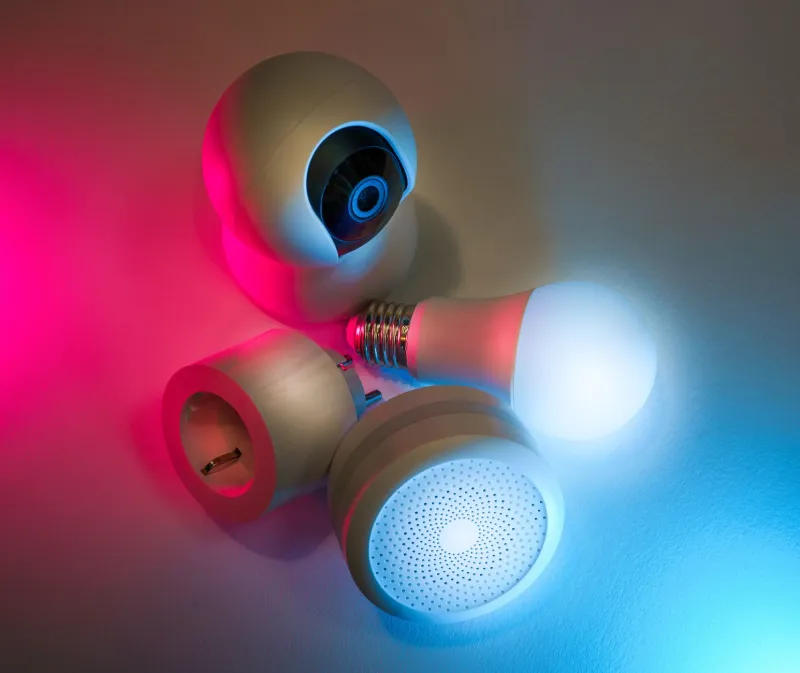
Consider a modestly outfitted American household in 2025: a smart thermostat, a video doorbell, a voice-activated speaker, a connected security system, and perhaps a smart television. Each of these devices generates data continuously. Individually, those data points may seem trivial. Aggregated over weeks and months, they compose something far more revealing.
A smart thermostat does not merely regulate temperature. Its occupancy sensors and scheduling algorithms learn when residents are asleep, when they are away, and when their routines deviate from the norm — a late night, an unexpected absence, a change in household size. Researchers at Carnegie Mellon University have demonstrated that thermostat data alone can be used to infer whether a home is occupied with high accuracy, a fact that has obvious implications for physical security as well as commercial surveillance.
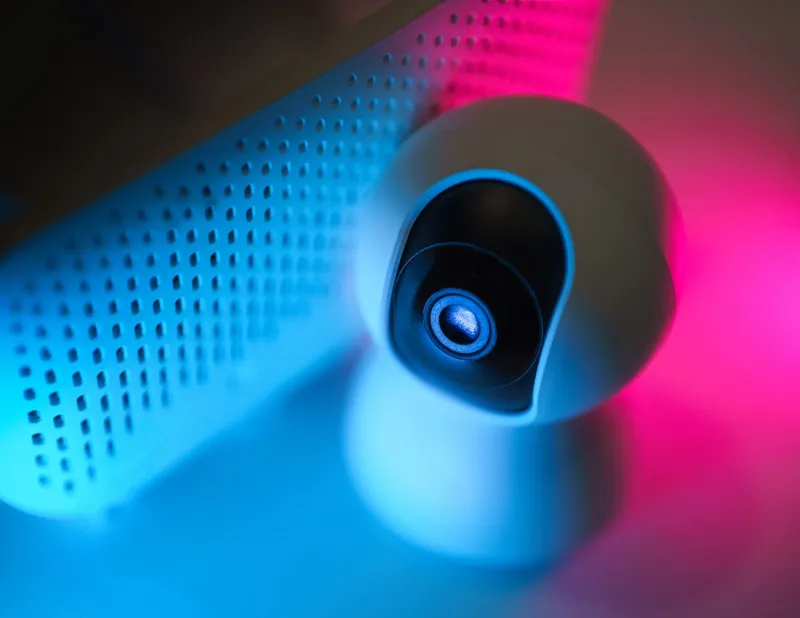
Video doorbells log every arrival and departure, timestamped and, in many cases, uploaded to cloud servers regardless of whether the homeowner actively reviews the footage. Smart speakers, meanwhile, are designed to remain in a persistent listening state. Although manufacturers insist that audio is processed only after a wake word is detected, independent security researchers have repeatedly documented instances of accidental activation — and the voice clips that result are frequently retained and reviewed by human contractors.
The Data Buyers You Have Never Met
Manufacturers are candid about data collection in the technical language of their privacy policies, even when they are less forthcoming in their advertising. The more consequential question is what happens to that data once it leaves your home network.
The answer, in many cases, involves data brokers — intermediaries who aggregate information from dozens or hundreds of sources and resell it to advertisers, insurers, financial institutions, and other commercial actors. A 2023 investigation by the Federal Trade Commission found that major data brokers were trading in granular location and behavioral data with minimal oversight, and that smart-home device data represented a growing share of their inventories.
The practical implications are significant. Insurers have explored using smart-home behavioral data to refine risk assessments. Mortgage lenders have shown interest in occupancy patterns as a proxy for lifestyle stability. Retailers use inferred household income and routine data to calibrate targeted advertising. None of these secondary uses require your explicit consent under current federal law, which has no comprehensive privacy statute governing commercial data collection.
Patterns That Reveal More Than You Intend
Beyond the commercial dimension, the behavioral patterns encoded in smart-home data carry security risks that are often underestimated by consumers.
Knowing that a household's thermostat consistently shifts to an away setting between 8:00 a.m. and 6:00 p.m. on weekdays is, functionally, equivalent to knowing when that home is unoccupied. Security researchers have shown that doorbell footage metadata — even without the video itself — can reveal predictable absence windows that could theoretically be exploited by bad actors if obtained through a data breach.
This is not a remote possibility. In 2021, Ring, the Amazon-owned doorbell company, disclosed that it had provided footage to law enforcement on hundreds of occasions without a warrant. Separately, a class-action lawsuit alleged that Ring employees had improperly accessed customer video feeds. The incident illustrated a principle that applies across the smart-home ecosystem: data that exists can be accessed, whether by authorized parties or not.
Practical Steps to Reduce Your Exposure
None of this requires abandoning connected devices entirely. A measured approach to smart-home privacy involves reducing unnecessary data exposure at each layer of the system.
Audit your network. Use your router's device list to identify every connected device in your home. Many households discover gadgets they had forgotten — an old smart plug, a connected printer, a television that has been silently reporting viewing habits for years.
Segment your network. Most modern routers support the creation of a guest network. Placing smart-home devices on a separate network from your primary computers and phones limits the damage a compromised device can cause and compartmentalizes data flows.
Review and restrict cloud features. Many smart-home functions can operate locally without sending data to a manufacturer's servers. Smart thermostats, for instance, do not require cloud connectivity to maintain a schedule. Disabling cloud sync where it is not essential eliminates a significant data pathway.
Read the privacy policy — specifically the sharing section. Most policies contain a section titled something like "How We Share Your Information." This section, rather than the opening paragraphs, reveals whether the company sells data to third parties or shares it with affiliates.
Opt out where possible. The California Consumer Privacy Act grants California residents the right to opt out of the sale of their personal data, and many companies extend this option nationally. The FTC's website maintains guidance on exercising these rights.
Consider device alternatives with stronger privacy commitments. A growing number of manufacturers, including several European brands, have built their market positioning around local processing and minimal data collection. These options are increasingly competitive in both price and functionality.
The Regulatory Gap
The United States remains one of the few developed nations without a comprehensive federal data privacy law. Sector-specific rules — HIPAA for health data, COPPA for children's information — leave the smart-home space largely ungoverned at the federal level. Several states, including Virginia, Colorado, and Connecticut, have passed their own privacy statutes, but enforcement has been inconsistent.
Consumer advocacy organizations including the Electronic Frontier Foundation have urged Congress to pass baseline privacy legislation that would require meaningful consent before behavioral data can be shared with third parties. Until such legislation exists, the burden of protection falls disproportionately on individual households.
Your smart home is, in many respects, a remarkable achievement of engineering. It is also, by design, a device that watches you as attentively as you watch it. Understanding that dynamic is the first step toward managing it on your own terms.