Ghost in the File: How Criminals Are Corrupting the Credit Bureaus Meant to Protect You
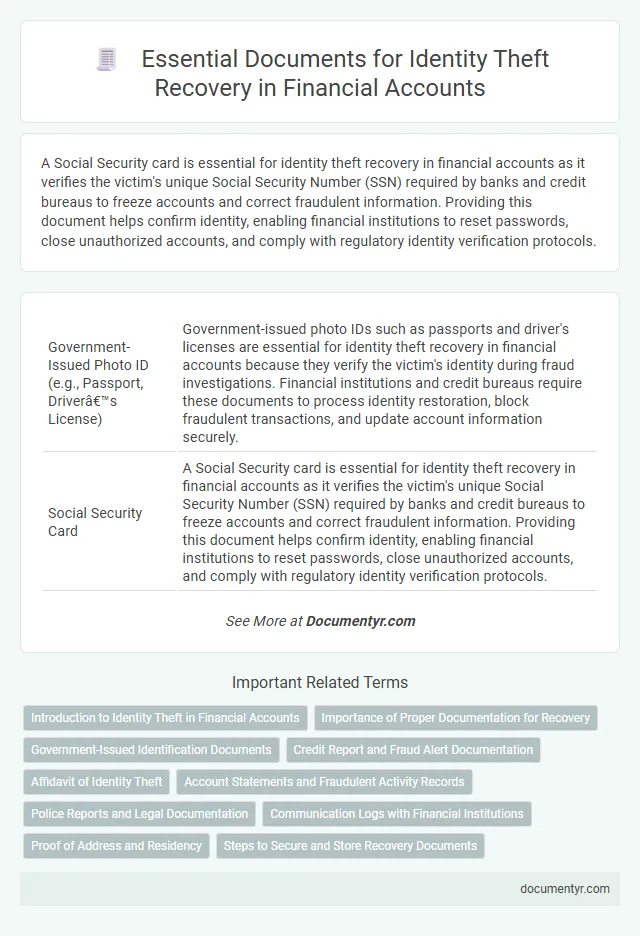
Photo: credit report identity theft fraud financial data security documents, via documentyr.com
The three major credit bureaus — Equifax, Experian, and TransUnion — occupy a peculiar position in American financial life. They are private companies, largely invisible to consumers during normal times, yet they exercise enormous influence over access to housing, employment, and credit. Most Americans interact with them only when something has already gone wrong. That delayed awareness is precisely the vulnerability that sophisticated fraud operations have learned to exploit.
The prevailing public understanding of credit fraud is rooted in a relatively simple model: a criminal steals your Social Security number, opens accounts in your name, runs up debt, and disappears. That model, while still accurate for a large share of cases, no longer captures the full scope of the threat. What is emerging in 2025 is a more technically complex form of financial identity crime — one that targets the bureaus themselves as a vector of manipulation, not merely as a repository of data to be stolen.
The Synthetic Identity: Building a Person Who Never Existed
The most consequential development in identity fraud over the past several years is the rise of synthetic identity fraud (SIF). Unlike traditional identity theft, which exploits the credentials of a real, living person, synthetic fraud involves the construction of a new identity assembled from fragments — typically a real Social Security number (often belonging to a child, an elderly individual, or someone with a thin credit file) combined with a fabricated name, date of birth, and address.
The resulting identity does not belong to any single real person. It is a composite — a ghost in the financial system. Because no actual victim immediately notices unauthorized activity on their own accounts, synthetic identities can be cultivated over months or years before any fraud is executed. Fraudsters use the constructed profile to open secured credit cards, make small purchases, repay balances consistently, and gradually build a credit score. This patient, methodical process is sometimes referred to in law enforcement circles as "farming" a synthetic identity.
Once the credit profile is sufficiently established, the operator executes what industry analysts call a "bust-out": maxing out every available credit line simultaneously and vanishing. By the time lenders recognize the pattern, the synthetic individual has ceased to exist. The Federal Reserve Bank of Boston estimated in a widely cited research note that synthetic identity fraud costs US lenders upward of $6 billion annually — a figure that has grown as detection tools have struggled to keep pace with increasingly sophisticated construction techniques.
When the Bureau Itself Is the Attack Surface
Beyond synthetic identity construction, a more direct and alarming tactic involves manipulating credit bureau records for real consumers. The mechanism exploits the dispute resolution process — a consumer protection tool that has, in the hands of fraud operators, become a weapon.
Under the Fair Credit Reporting Act, consumers have the right to dispute inaccurate information on their credit reports, and bureaus are required to investigate and respond within a defined timeframe. Fraud rings have identified this process as a means of laundering fraudulent tradelines — credit account entries — into legitimate-looking profiles. By submitting fabricated documentation to support false disputes, operatives have in documented cases succeeded in removing legitimate negative entries from stolen-identity profiles, effectively rehabilitating a fraudulent credit history at the expense of the bureau's data integrity.
A 2023 enforcement action by the Consumer Financial Protection Bureau (CFPB) against a credit repair operation in Florida detailed exactly this mechanism: the company was submitting mass dispute letters on behalf of clients using fabricated supporting documents, successfully removing accurate derogatory information and, in some cases, inserting positive tradelines through relationships with complicit creditors. The case illustrated that the vulnerability is not purely technical — it is procedural and human.
Breach Case Studies: The Damage Already Done
The 2017 Equifax breach, which exposed the personal information of approximately 147 million Americans, remains the most consequential data exposure event in the history of consumer credit. The stolen dataset — which included Social Security numbers, birth dates, addresses, and in many cases driver's license numbers — provided a near-complete toolkit for synthetic identity construction. Security researchers have noted that the full downstream impact of that breach is still being realized years later, as fraudsters with access to the stolen data continue to open accounts and execute bust-outs on identities built from its contents.
More recently, the 2023 breach at, a data broker operating under the name National Public Data exposed a reported 2.9 billion records, including Social Security numbers and historical address data spanning decades. The breadth of that exposure means that for a substantial portion of the American adult population, the raw materials for synthetic or stolen-identity fraud are already in circulation on dark web marketplaces. The question for most consumers is not whether their data has been compromised — statistically, it likely has — but whether they are actively monitoring for signs of exploitation.
Auditing Your Financial Footprint: A Practical Framework
Given the scale of data exposure and the sophistication of current fraud operations, passive reliance on credit monitoring services is no longer adequate. The following steps represent a structured approach to understanding and protecting your financial identity.
Pull all three bureau reports simultaneously. AnnualCreditReport.com is the only federally authorized source for free credit reports from all three major bureaus. Review each report independently — discrepancies between bureaus can themselves be a signal of manipulation. Look specifically for accounts you do not recognize, hard inquiries from lenders you have not approached, and addresses or employers you have never provided.
Place a security freeze, not merely a fraud alert. A fraud alert instructs creditors to take additional verification steps before extending credit, but it does not prevent new accounts from being opened. A security freeze — available at no cost under federal law — restricts access to your credit file entirely, preventing new credit from being issued without your explicit authorization. Freezes must be placed separately at each of the three major bureaus, as well as at smaller specialty bureaus such as ChexSystems and the National Consumer Telecom & Utilities Exchange (NCTUE), which are frequently overlooked.
Monitor your Social Security earnings record. The Social Security Administration's online portal (ssa.gov) allows Americans to review their reported earnings history. Unexplained income from employers you have never worked for can indicate that your SSN is being used for employment-based identity fraud — a category of misuse that credit monitoring tools typically do not capture.
Request your CLUE report. The Comprehensive Loss Underwriting Exchange (CLUE), maintained by LexisNexis, records insurance claims associated with your name and address. Fraudulent insurance claims filed under your identity will appear here before they surface anywhere else.
Set up transaction alerts on all financial accounts. Real-time alerts for every transaction — including those below typical fraud-detection thresholds — provide the earliest possible warning of unauthorized activity. Many financial institutions allow these to be configured at the account level through their mobile applications.
The Gaps in Current Protections
It would be reassuring to report that the regulatory framework governing credit bureaus is robustly equipped to address these threats. The reality is more complicated. The FCRA was enacted in 1970 and has been amended incrementally, but its core architecture predates the internet, let alone the current generation of AI-assisted fraud. The dispute resolution process, as noted above, contains structural vulnerabilities that have been actively exploited. Proposed federal data broker legislation has stalled repeatedly in Congress, leaving the market for stolen consumer data largely unregulated at the federal level.
The CFPB has increased enforcement activity in recent years, and several state attorneys general — particularly in California and New York — have pursued aggressive actions against fraudulent credit repair operations. These are meaningful developments. They do not, however, substitute for individual vigilance.
The Core Principle
The institutions designed to protect your financial identity are imperfect, occasionally compromised, and operating under legal frameworks that have not kept pace with the threat environment. That reality does not counsel despair — it counsels proactive engagement. The consumers least likely to become victims of sophisticated credit fraud are those who treat their financial footprint as something to be actively managed rather than passively trusted to others.
Your credit file is, in a meaningful sense, your financial identity. Knowing what is in it — and monitoring it with regularity — is no longer optional due diligence. It is a basic requirement of financial self-defense in 2025.